

A Plan to Secure the Future of Humanity from Existential Threats
Introduction and Context
Building on previous plenaries, meetings, and reports, the inaugural meeting of the Global Existential Security Threats (EXIST) Board was held at the InterAction Council plenary, a group of former world leaders and heads of government, in October 2024. The overall purpose of the EXIST Board is to strengthen global security efforts to prevent and reduce existential threats and ensure the survival of humanity.
Foundational members of the EXIST Board include leaders from: One Young World, the Club of Madrid, the Club of Rome, Leaders for Peace, the World Academy of Art and Science, the Commonwealth Foundation, and the Global Futures Platform for Planet, People and Peace.
The launch of the global EXIST Board at the InterAction Council Plenary session in China, October 2024, supports the Beijing Statement, and is advanced with partners from the Plans for the Planet Peace and People, as part of Strategy X–EXIST.
This handbook builds upon and advances recommendations from statements, meetings, and reports, including the InterAction Council’s Universal Declaration of Human Responsibilities, the Dublin Charter for One Health, the Dublin Pact for Peace, and recommendations for strengthening global governance for existential threats to humanity, presented at a High Level Meeting at the House of Lords.
The EXIST Board aims to enable further collaborative actions that strengthen multilateral governance by developing and delivering living plans for Strategy X–EXIST to be advanced collaboratively with supportive partners committed to this agenda.
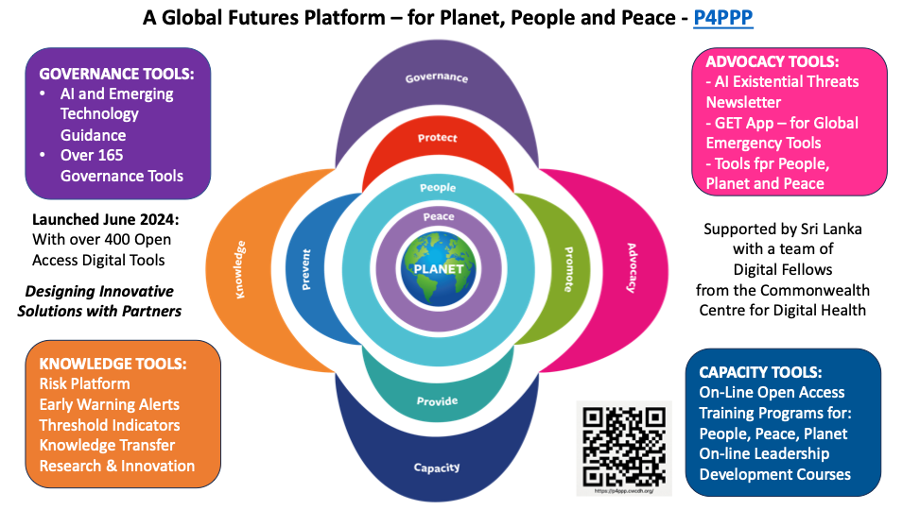
Strategic and innovative solutions are being scaled up and enabled by the Global Futures Platform for Planet People and Peace, which already provides over 400 digital tools as a global good. Further partners are welcome to work together to create the world that we want and to secure the lives and well–being of our future generations.
Priorities for the Survival of Humanity
In 2025, a high–level meeting on priorities highlighted the risks of trade wars, the weakening of democracies and the rule of law, the fragmentation of the UN and multilateral co–operation, a reversal of climate commitments with the further exploitation of fossil fuels, combined with the deregulation of emerging technology and the rapid spread of misinformation.
Priorities identified for securing humanity's survival included preventing runaway climate change, staying within the 1.5 °C safe limit, and addressing raging wildfires, floods, and warming oceans – all symptoms of climate–related breakdown. A call was made to support and strengthen the World Health Organization to protect the world from further pandemics. The importance of governance and controls for emerging technologies, including the weaponisation of technologies and the unintentional release of synthetic, laboratory–created pandemics, was raised.
Uncontrolled conflicts with the illegal expansion of territories create further divisions in global cooperation and draw energy away from larger threats to humanity, whilst increasing risks from nuclear catastrophe. Addressing the root causes of insecurity and strengthening community and human security were emphasised as pathways to peace. Furthermore, planetary peace was described as a transformative concept for creating a flourishing, sustainable world for all.
Planetary Leadership Required! “The world is facing ever–increasing threats to the survival of humankind. By bringing courageous young people, committed former world leaders, and international diplomats together, we hope to make the world a safer place for everyone.”
Young leaders have stood at the helm of driving this initiative forward, with One Young World, in partnership with the InterAction Council, establishing the Global Youth Security Council for Existential Threats in 2023. President Obasanjo, co–chair of the InterAction Council with Mr Ahern, in 2024, reflected that: “We know the causes, and we know the effects of our global challenges. What remains is political will and political action. Securing our future generations requires creating cooperative and transformational leaders who act for everyone with values and purpose.” The InterAction Council encourages young leaders to advance Strategy X–EXIST, in collaboration with partners, to enable partnerships, amplify advocacy, enhance innovation, and strengthen planetary leadership through intergenerational leadership exchange and learning. “The world needs you! We encourage the active engagement of leaders – young and old, countries and international organisations alike to work together towards a safer world for everyone.”
|
Summary of Contents
This report builds on a series of policy briefs and serves as a handbook for planetary leaders, starting with an outline of Strategy X–EXIST, an introduction to the plan for planetary leadership, followed by Plans for the Planet, People, Peace, and Prosperity, and a governance framework for Artificial Intelligence. A summary of a new Planetary Arts Movement – X–ART has been established to support advocacy and to mobilise community action, and the Global Futures Platform for Planet People and Peace is introduced as a resource to advance Strategy X–EXIST. Lastly, an outline curriculum framework to develop the skills and capabilities of planetary leaders is presented for discussion and will serve as the basis for a longer companion handbook for planetary leaders.
Strategy X–EXIST
A Plan to Secure the Future of Humanity from Existential Threats
A Collaborative Initiative by the InterAction Council with One Young World
Vision: Create a flourishing and safe world for all to secure the well–being of future generations.
Goal: Prevent and reduce risks from existential threats to ensure human survival.
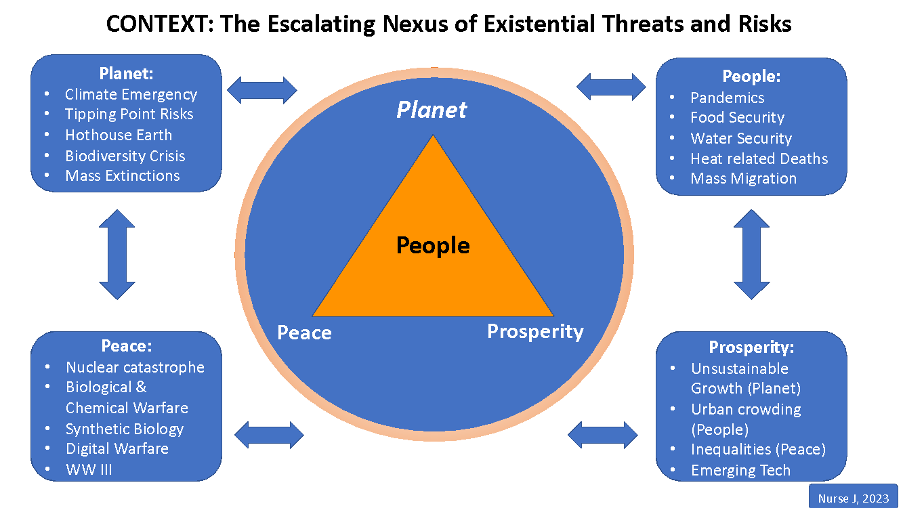
Key Threats and Risks: Existential threats and risks can be considered under the Sustainable Development Goal clusters of Planet, Peace, People and Prosperity – priorities in italics:
Planet: mass extinctions in the past were caused by asteroids and massive volcanic eruptions, leading to biodiversity collapse; Tipping Points and Runaway Climate Change.
People: Inequalities, food and water insecurity drive migration and conflict, whilst a warming planet increases the risk of pandemics with the potential to threaten human existence; intentional or unintentional release of Synthetic Pandemics.
Peace: Nuclear, chemical, and biological warfare, including engineered pandemics; Digital Warfare and Artificial Intelligence; Conflicts that risk Nuclear Catastrophe.
Prosperity: Mechanical–Technical–Industrialisation, including unsustainable growth (planet); unhealthy, crowded cities and rapid travel (pandemics); and widening inequalities (peace). Human security risks are posed by emerging technologies, including ungoverned Artificial General Intelligence.
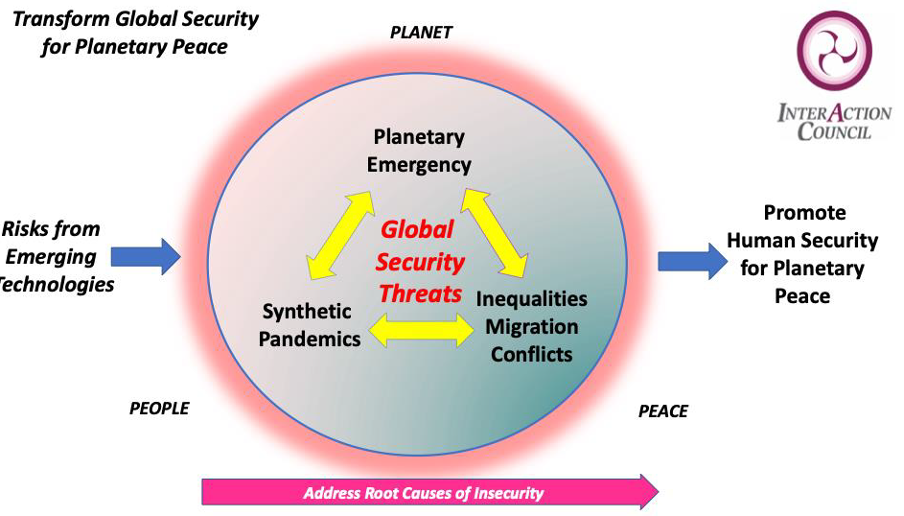
Challenges: include geopolitical turbulence, fragmented global governance, sectoral and reactive responses, compounded by populism, misinformation, the underestimation or denial of risks and competing interests. Threats and risks often interact and reinforce each other with the potential to escalate existential catastrophes, as illustrated below:
Strategic Sustainable Systems: Utilise strategic foresight to design systems for the delivery of multi–disciplinary governance and policy for the:
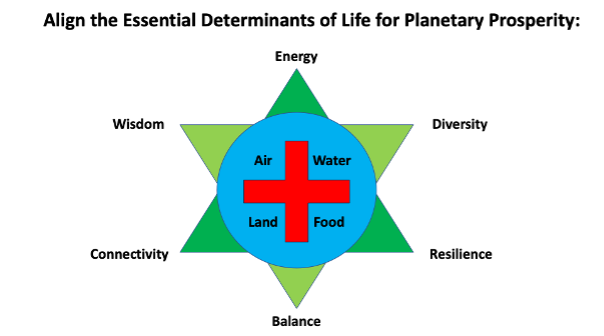
PLANET − CPR2 − Cool, Plan, Remove and Recover: Prevent tipping points from escalating and creating runaway climate change; design strategic Global, Regional and Community Plans to stabilise Essential Determinants of Life, including Temperature, Air, Water, Land and Food systems, to create a Flourishing Planet for future generations.
PEOPLE − Prevent Pandemics: Enhance global governance and health diplomacy to transform global health security into a global good; enable prevention, detection, early warning systems, preparedness, and response operations through digital solutions; strengthen Health Systems to promote resilience and population well–being for All.
PEACE – Human Security to Planetary Peace: Create a Culture of Peace to tackle root causes of violence and insecurity as a basis for Human Security; Design Pathways to Peace and rebuild post conflict communities with reconciliation, recovery and rehabilitation plans; Prevent Violence and Wars – intervene early by strengthening the rule of law, diplomacy and development initiatives; Control Weapons: for technologies and weapons of mass–destruction; Promote Planetary Peace: embed planetary security within global security frameworks, to secure the essential determinants of life.
PROSPERITY – AI Governance and Human Security as Global Goods: Establish Global Governance for Digital Technology and AI, including Artificial General Intelligence; promote open access innovative solutions, including for Health and Education; scale renewable energy to underpin Human Security, Sustainable Development and Growth.
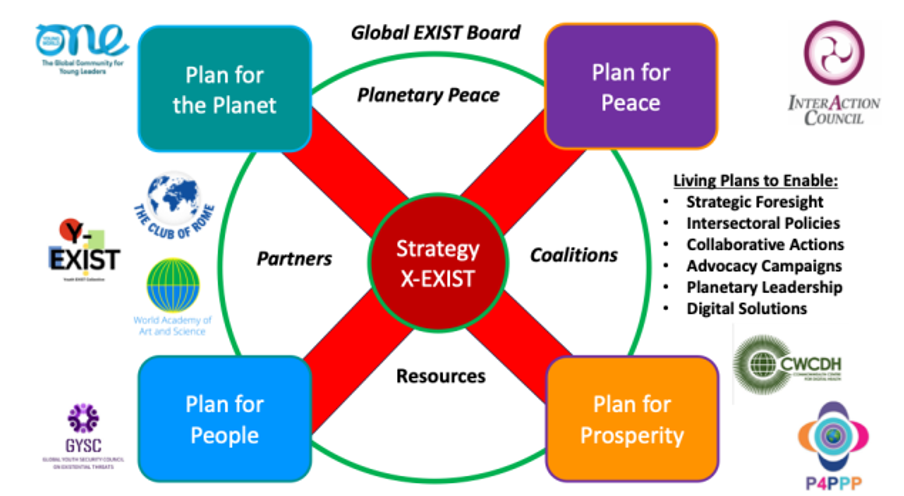
Recommendations: Draw upon priorities identified by the EXIST Board to guide collaborative action scaled up with partners, including the Global Youth Security Council and One Young World.
GOVERNANCE: Establish a Global Existential Security Threats EXIST Board
STRATEGY: Develop living plans linked to Strategy X–EXIST to save the future of humanity
PLATFORM: Advance a Global Futures Platform – for Planet, People and Peace P4PPP
ADVOCACY: Enable young leaders to champion a media campaign for community action
LEADERS: Strengthen intergenerational leadership to secure the survival of humanity
PARTNERS: Coordinate and scale collaborative partnerships and global communities
The Global Futures Platform – for Planet, People and Peace – P4PPP was launched in 2024 with over 400 digital tools to enable the Strategy X–EXIST and to promote life, health and well–being.
Planetary Leadership Plan for People and Peace
To Strengthen Global Governance for the Survival of Humanity
Context: This initiative is part of the intergenerational Existential Security Threats –EXIST Board, including Strategy X–EXIST, and a series of high–level ‘Plans’ enabled by digital solutions from the Global Futures Platform for Planet People and Peace. Further partners are welcome to advance collaborative actions and create tools for different audiences.
Key Messages:
Increasing Challenges to Human Existence – priority threats to the survival of humanity include our planetary emergency, nuclear catastrophe, pandemics and risks from emerging technologies, including artificial general intelligence.
A Crisis of Leadership – has been revealed by a rise in dominance behaviours and governments that undermine our ability to respond to global challenges effectively through strategic and collaborative mechanisms.
The Purpose of Leadership – is to provide security and coordinate collaborative actions to enable everyone to survive and thrive into the future.
Matching Skills to Challenges – to survive as a species, we need to match leadership skills to avert the complex challenges to our existence effectively.
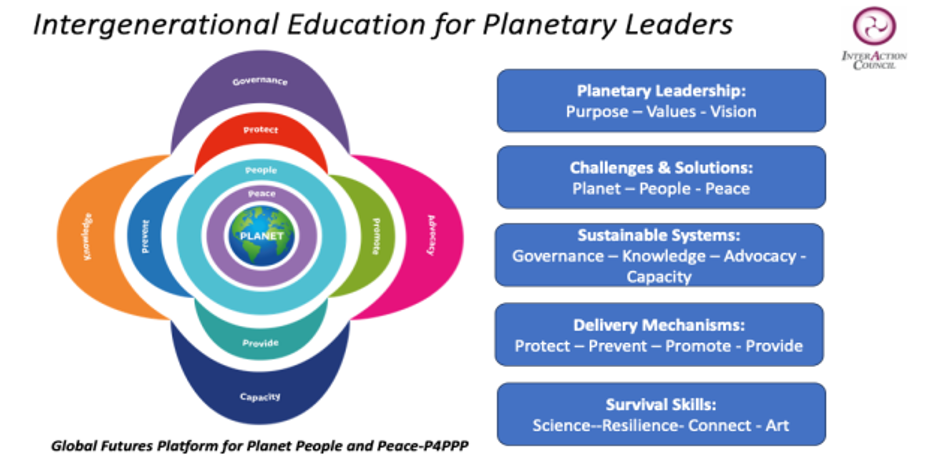
Intergenerational Education for Planetary Leaders – requires transdisciplinary knowledge of challenges and social transformation, with interdependent and integrated perspectives and skills for decision–making based upon planetary principles, prioritisation, sustainable systems, effective delivery mechanisms, and survival skills that enable leadership behaviours for people and peace.
Transformational Training for Planetary Leaders – scale up training for dynamic, diverse leaders with digital solutions to maximise resilience and innovation that enable communities to survive and thrive.
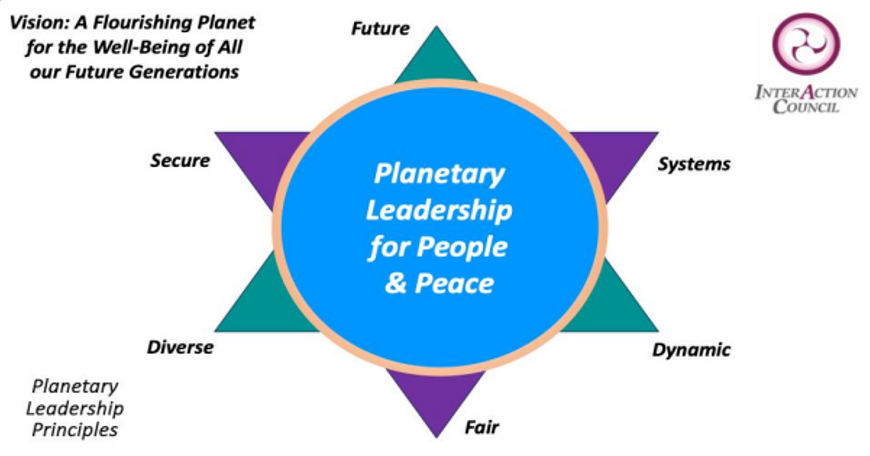
Planetary Leadership Principles: applies Future–focused and Fair decision–making; coordinates Security with sustainable Systems; enhances resilience by maximising Diversity; and creates Dynamic, innovative solutions for positive change.
A Curriculum Framework for Planetary Leadership
Planetary Leadership:
Purpose of Leadership: Security and Coordination
Principles: Future – Fair – Secure – Systems – Diverse – Dynamic
Vision: Securing the Well–Being of Future Generations for All
Challenges and Solutions:
Planetary Security: Existential Threats and Risks, and the Poly–crisis
Sustainable Development Goals: for Human Security and Planetary Resilience
Plans: Strategy X–EXIST and plans for the Planet Peace and People, Prosperity; AI Governance, Advocacy – Planetary Arts, and Planetary Leadership
Sustainable Systems:
Governance: legislation, policy, finance, accountability, monitoring, prioritisation
Knowledge: root causes, strategic foresight, effective interventions, indicators
Advocacy: communications, catalysts for change, sustainable development
Capacity: infrastructure, life–course educational systems, workforce planning
Delivery Mechanisms:
Protect: emergency & preparedness plans, early–warning systems & interventions, adaptation
Prevent: address root causes and risk factors, avert and mitigate impacts, and recovery
Promote: human security, enablers, flourishing communities, well–being
Provide: local to global integrated multi–sector delivery services and systems
Survival Skills:
Resilience: personal, community, environmental, planetary, survival responses
Wisdom: history, nature–based solutions, ecological principles, indigenous worldviews
Thrive: food & water security, sustainable civilisations, harmonious planetary communities
Transformational Training for Planetary Leaders
Youth Leaders – develop an Academy for Youth–Led Solutions to Existential Threats Life Course Education: incorporates skills across the life course through an educational curriculum MOOCs: scale up Leadership training through Massive Open–Access Online Courses (MOOCs) Professional Programmes: embed Micro–credits throughout professional training programmes Personal Training: enhance skills with Intergenerational Leadership Retreats and Mentoring Digital Platforms: continue to connect diverse and dynamic leaders from all communities of the world to maximise resilience and innovative solutions. |
A Plan for the Planet:
Averting Risks to Human Survival from Runaway Climate
Context: This initiative is part of the intergenerational Existential Security Threats –EXIST Board, including Strategy X–EXIST, and a series of high–level ‘Plans’ enabled by digital solutions from the Global Futures Platform for Planet People and Peace. Further partners are welcome to advance collaborative actions and create tools for different audiences.
Runaway Climate Change Threatens Human Life, Survival and Existence:
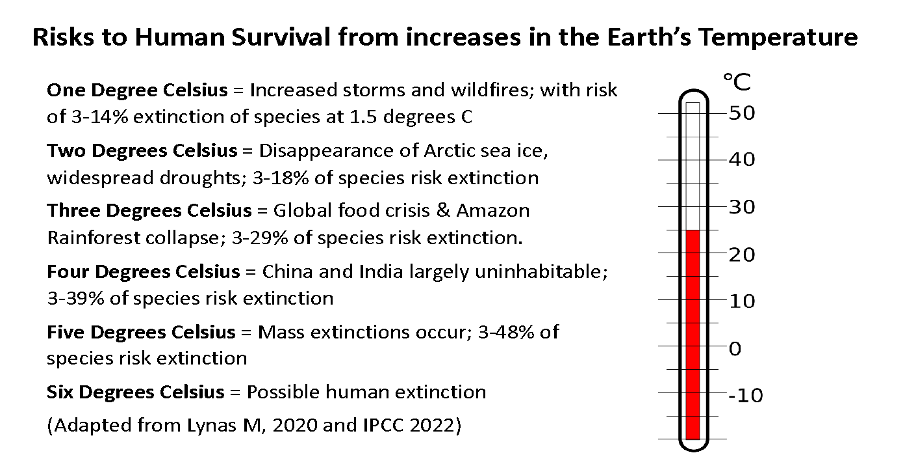
A Critical Era for Humanity – we are at a critical point in the survival of human civilisation, which has existed for over 800,000 years, spanning 1°C to +1 °C.
Current Policies and Actions are not Enough – 2024 was the hottest year on record, with average global temperatures reaching 1.54° C above pre–industrial levels; current trajectories are likely to reach 2.6–3.1°C by 2100, which risks further temperature rises.
Runaway Climate Change – was triggered between 1°C–3°C according to historical records, and threatens human security now, whilst risking our longer–term survival.
Safe Thresholds are already being Exceeded – with increasing temperatures, droughts, wildfires, and melting permafrost, our oceans, forests, and land have reached tipping points that are releasing more warming emissions than they can absorb.
Temperatures will Continue to Increase – as carbon sinks from the oceans, forests and land release more and more warming emissions that make the earth hotter and hotter.
At the Threshold of the World’s Sixth Mass Extinction – 60% of biodiversity has already declined since the 1970s, and 1 million species are threatened with extinction.
Previous Mass Extinctions – occurred at temperatures 5°C or higher; temperatures for our grandchildren are projected to continue rising to 10°C from 2100 to 2200.
What we do now is Critical for our Survival – we have already reached thresholds for runaway climate change, which risks the future of life and the survival of humankind.
We need a Plan for the Planet!
To avert Runaway Climate Change and Threats to the Survival of Humanity
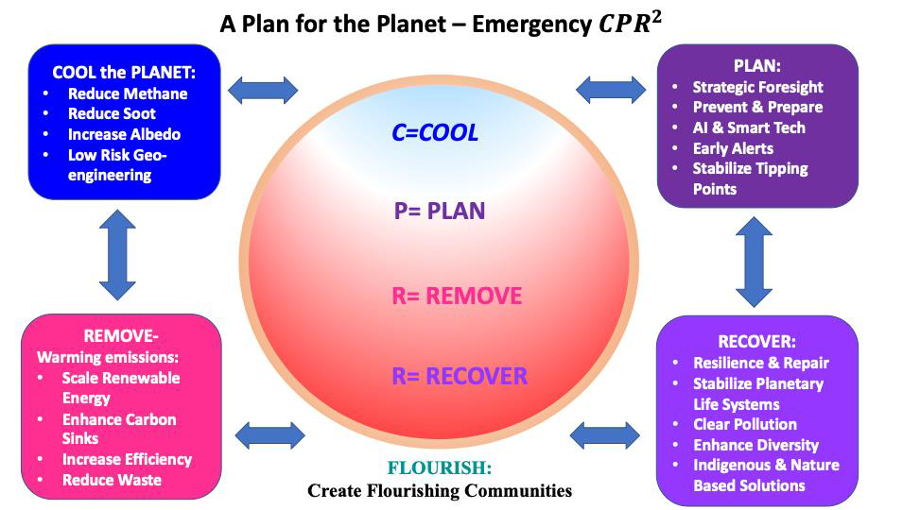
A Plan for the Planet – Emergency CPR2:
C= COOL: Emergency Cooling of the Planet: avoid tipping points from escalating into runaway climate change by urgent methane and black carbon (soot) reduction; cool communities by reflecting light and heat with white (high albedo) paints, materials, and plants; consider low–risk geoengineering overseen by monitoring and global governance.
P= PLAN: Prevent and Prepare: utilise experts & AI to create smart, strategic multi–system plans based upon foresight modelling and warning alerts to identify early tipping points to reduce risks with cost–effective interventions that maximise benefits to people and planet.
R= REMOVE: Rapid Reduction and Removal: of warming emissions by scaling renewable energy sources and by increasing energy efficiency; enhance the role of soil, oceans, forests and plants in their role as carbon sinks; reduce waste and energy–rich food production with sustainable and regenerative food and agricultural systems, combined with effective carbon removal systems.
R= RECOVER: Resilience, Repair and Recovery: stabilise our planet’s essential determinants of life, including temperature, air, water, land and food systems, by clearing pollution and enhancing diversity and resilience to repair and recover our environments and ecosystems, enabled by indigenous communities and nature–based solutions.
FLOURISH: Create Flourishing Communities: enable networks of diverse, intergenerational communities to design local–to–global liveable ecosystems that benefit people and the planet, securing the world we want for the well–being of our future generations.
Recommended Indicators and Targets: CPR2 to create a Flourishing Planet for All
COOL: aim to keep global average temperatures below 1.5°Celsius; monitor global reflection (albedo) patterns to adapt nature–based solutions, apply and test safe geological interventions. PLAN: develop living strategic frameworks that can be applied at global, national and local levels. REMOVE: aim to remove 500 gigatons of historic carbon emissions to achieve stable levels for human civilisation at 300–350 ppm for CO2 and below 10 gigatons of Methane emissions. RECOVER: repair essential life systems (air, water, land and food) – and monitor progress with an index for the essential determinants of life and informed by Planetary Boundaries. FLOURISH: create a multi–system index for planetary peace and sustainable well–being that can be applied at global, regional, national and community levels. |
Going forward, we will need to coordinate low–risk methods to keep our planet cool and remove historic emissions to achieve stable temperatures for the survival of humanity.
A Plan for Peace:
Promote Planetary Peace to create a flourishing World for all to Thrive
Context: This initiative is part of the intergenerational Existential Security Threats –EXIST Board, including Strategy X–EXIST, and a series of high–level ‘Plans’ enabled by digital solutions from the Global Futures Platform for Planet People and Peace. Further partners are welcome to advance collaborative actions and create tools for different audiences.
Purpose: combine learning to transform security to actively prevent wars, effectively recover from conflicts, and avert nuclear and global catastrophe for the survival of humanity.
Key Challenges:
The Doomsday Clock – in 2025 places the world at 89 seconds to midnight, a position closer than ever before to threats to human existence.
Risks from Nuclear Catastrophe – could occur from weapons or from attacking a nuclear plant; since the 1950s, over 20 accidental or near–misses have been recorded; whilst sea–level rise risks flooding of reactors with substantial land contamination.
Nuclear Impacts for Humanity – an all–out exchange could initially kill billions, followed by a nuclear winter for 4–5 years, resulting in mass extinctions; even a small nuclear catastrophe could devastate crops and lead to widespread food insecurity.
Weaponised Technologies – including drones and robotic weapons, allow for greater destruction at increasingly remote positions; poorly governed chemical, radioactive and biological materials can already be weaponised, whilst the emergence of artificial general intelligence (AGI) potentially threatens human existence.
Global Turbulence and Conflicts – are destabilising the foundations of human security around the world, escalating conflicts and heightening the risk of World War III.
Conflicts Divert Resources – reducing investment in development that prevents root causes of conflict, and further reduces resilience to address our planetary emergency.
We need a Plan for Peace!
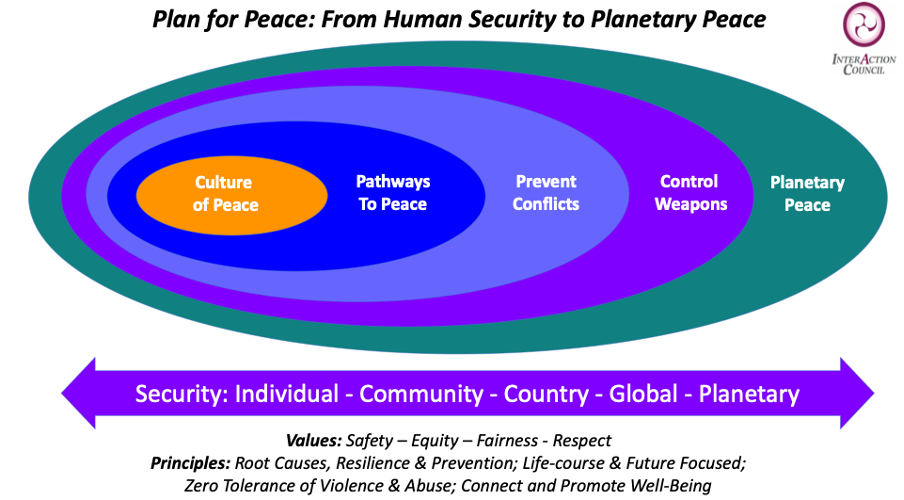
Plan for Peace – From Human Security to Planetary Peace:
Individual – Create a Culture of Peace: tackle root causes of violence and insecurity at individual and societal levels with Human Security for safe, fair and green communities
Community – Pathways to Peace: design and rebuild green communities to promote human security, with recovery from trauma, reconciliation and regeneration as part of peace processes that enable communities to build back better to create enduring peace;
Country – Prevent Conflicts and Wars: identify risk factors for emerging conflicts to intervene early through the rule of law, diplomacy and development combined with shared values that enable cooperation and trade within and between countries;
Global – Control Weapons: advocate for and agree on global rights and responsibilities; implement controls for technologies and weapons of mass–destruction; adopt no first use policies, remove hair trigger alerts and pledge no use of nuclear weapons;
Planet– Promote Planetary Peace: embed planetary security within global security frameworks, including redirecting investments in war to avert runaway climate change and secure the essential determinants of life for human security on a flourishing planet.
Cost–Effective Interventions to Prevent Root Causes of Violence and Abuse | |
Individual | Community |
● Identification of Abuse and Treatment of Perinatal Depression ● Home Visitation and Parenting Programs ● Early Interventions for Conduct Disorder ● Multi–Systemic Therapy ● CBT and PTSD treatment |
|
A ‘Partners Alliance to Catalyse Transformation for Peace’ – a PACT for Peace, to:
Resources: Peace Tools and Evidence on Preventing Violence – Promoting Peace |
A Plan for People:
Preventing Risks from Existential Threats for Pandemics
Context: This initiative is part of the intergenerational Existential Security Threats –EXIST Board, including Strategy X–EXIST, and a series of high–level ‘Plans’ enabled by digital solutions from the Global Futures Platform for Planet People and Peace. Further partners are welcome to advance collaborative actions and create tools for different audiences.
Key Challenges – Increasing Pandemic Risks combined with less Resilience:
The COVID–19 Pandemic – cost millions of lives and had a devastating impact on the global economy, for 2020–21 estimated at US$10 trillion or 4.3% in lost GDP, and has acted to destabilise global security with a shift to populist governments.
Existential Threat Potential from Pandemics – In the past, about 90% of the indigenous populations in the Americas died from smallpox, measles and influenza.
Pandemics from Nature – the risk of pandemics is higher than ever before; 70% of new and emerging human infections originate in animals. Expanding populations, urbanisation, travel, and climate change increase our exposure.
Pandemic Watch List – 24 pathogens with pandemic potential or antimicrobial resistance have been identified; in 2024, 17 outbreaks of dangerous diseases were reported, including Marburg virus, Mpox, and Avian flu (H5N1), all of current concern.
Engineered and Synthetic Pandemics – gain–of–function research has created more lethal variants, including vaccine–resistant smallpox; stronger global governance to prevent the intentional or unintentional release of infections is needed as the number of scientists and laboratories capable of genetically engineering pathogens increases.
Governance, Coordination and Communication – despite progress made with the Pandemic Treaty, the weakening of the WHO and our global multi–lateral organisations, along with misinformation and a lack of trust, increases pandemic risks.
Public Health Systems and Resilience – following the COVID Pandemic, we saw a reversal in SDG progress, a widening of inequalities, a drop in life expectancy, and an increase in Non–Communicable Diseases, indicating a lack of population resilience for future pandemics, which is worsened by cutbacks in our Public Health Systems.
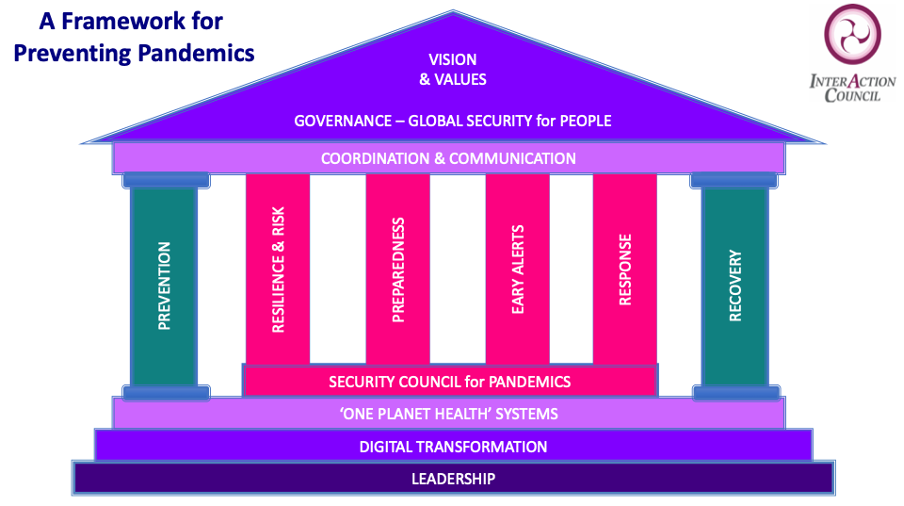
We Know How to Prevent Pandemics – But We Need to Be Prepared
A Plan for PEOPLE – to Prevent Pandemics:
Enable Global Governance for Pandemics: invest in the Pandemic Treaty, and strengthen health diplomacy to transform global health security as a global good;
Strengthen Public Health Systems: prevention, detection, early warning systems, preparedness and response operations with digital solutions
Enhance Population Resilience: with Universal Health Systems to promote resilience and population well–being for All
A Systems Framework for Healthy People – Essential Public Health Operations
|
A Global Futures Platform – Transforming Health for People, the Planet and Peace
Recommendations for Preventing Pandemics:
|
A Plan for Prosperity:
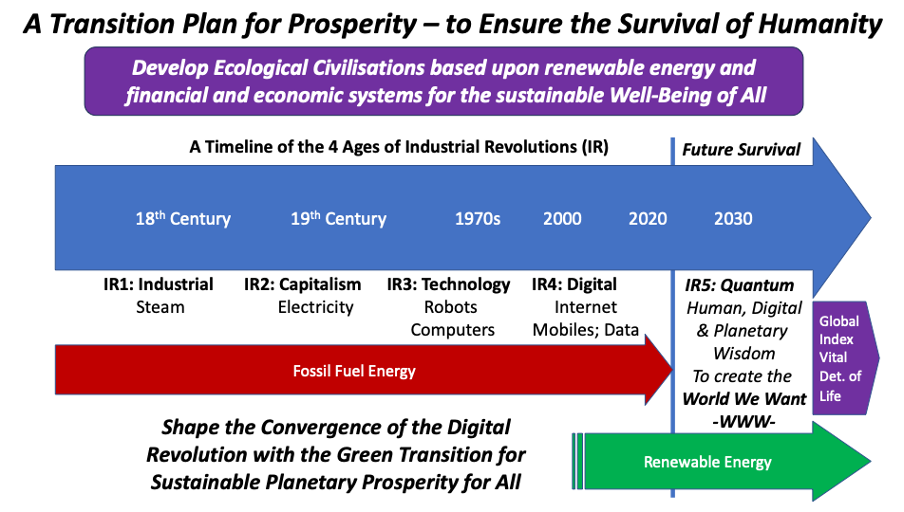
Develop Ecological Civilisations based upon renewable energy and sustainable financial and economic systems for the Well–Being of All
Context: This initiative is part of the intergenerational Existential Security Threats –EXIST Board, includingStrategy X–EXIST, and a series of high–level ‘Plans’ enabled by digital solutions from the Global Futures Platform for Planet People and Peace. Further partners are welcome to advance collaborative actions and create tools for different audiences.
Purpose: to realign our financial and economic systems to ensure the longer–term survival of humanity, supporting resilience and planetary well–being for all.
Key Challenges:
Living Beyond Planetary Boundaries: humanity is exceeding sustainable limits for our continued survival, with seven of nine planetary boundaries now breached. These include critical life support systems for life on this Earth.
Current Methods of Achieving Prosperity are Unsustainable: our existing financial systems are based on consumption, debt, and continued growth and are no longer linked to nature and real value, leading to the exploitation of Earth's resources.
Widening Wealth Inequalities: our current global financial, economic, and trade systems act to widen inequalities within and between countries, which, in turn, escalate migration, conflicts, and wars.
Gaps in Funding Externalities: our current economic models are insufficient to fund the global commons that protect and benefit everyone on this planet, including the SDGs in areas such as health, education, and the environment.
Reversal of progress on Sustainable Development Goals (SDGs): following the COVID–19 Pandemic, progress on the SDGs has slowed, with 18% in reverse, weakening our resilience and global security for future challenges.
The Global Transition in Technologies: With the advent of AI and future technologies like Quantum Computing, significant and rapid shifts in the creation of prosperity are already impacting workforce employment and productivity.
A Plan for Prosperity – A Pathway to Ecological Civilisations
Rapid investment to Stabilise Planetary Boundaries: including recovery and regeneration, by redirecting pension savings, government bonds and investments; reorienting subsidies, incentives, indicators and monitoring standards.
Ensure Human Security as a Global Good: promote open access innovative solutions, including for the Planet, People and Peace; redirect investments to scale low–cost renewable energy to underpin Human Security, Sustainable Development and Growth.
Fund our Global Commons to enhance Resilience: monitor and price externalities; establish sustainable funding and perpetual endowments from public and private sources for the long–term delivery of the SDGs, Health, Education, and the Environment.
Reduce Inequalities to Prevent Conflicts: promote a culture of Peace, with renewable energy security, transparent finances, progressive taxation, and a transition from aid to post–colonial redistribution, with policies that democratise trade and economic systems.
Redesign our financial, monetary and economic systems: so that they are based upon real assets, real production, and real ecological value, enabling the democratisation of communities, circular economies, and ensuring a sustainable world.
Promote the Digital Transformation to Benefit Humanity: establish global governance for digital technologies, including AI and Artificial General Intelligence, to reduce harms and risks, whilst maximising the benefits of digital solutions for humanity.
Design and Create Ecological Civilisations: actively design communities that combine nature–based solutions, urban planning, and cultural capital to enable planetary recovery and healing, transformed by well–being economies for ecological civilisations.
Recommendations for Collaborative Action:
|
Towards an Artificial Intelligence Governance Framework
Artificial Intelligence (AI) includes the perception, synthesis, and inference of information, demonstrated by machines rather than humans or animals. AI is broadly characterised into 3 categories: Artificial Narrow Intelligence (ANI), which currently exists, with the future potential developments of Artificial General Intelligence (AGI) and Artificial Super Intelligence (ASI).
The Centre for AI Safety has released a statement saying, “Mitigating the risk of extinction from AI should be a global priority alongside other societal scale risks such as pandemics and nuclear war”. https://www.safe.ai/statement–on–ai–risk. The top tech leaders are worried. They believe AI is moving too fast, with the potential to impact society and humanity negatively. The recent emergence of AI has raised many questions, including how powerful it is. How can we control it? Or can we control it? Is it ethical? Does it represent an existential threat to humanity?
This briefing outlines the potential risks, governance options, and opportunities to maximise the benefits of emerging technologies, including AI, through enhanced capacity.
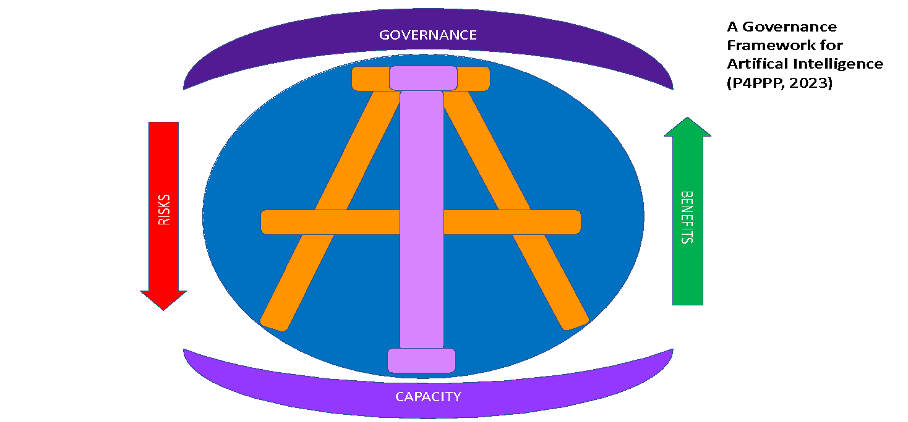
Potential Risks from Artificial Intelligence
Unemployment: with human jobs being taken over by AI
Increased Inequalities: AI is already controlled by a handful of companies and algorithms that will further exaggerate existing human bias and inequalities
Quality of Education: the rapid validation of students' original work is required as AI is being utilised to complete coursework, and could reduce the value of educational certificates
Misinformation: decision–making by AI is not transparent, and AI creates its own information that could destabilise governments and influence election outcomes and democracy
Privacy and Human Rights: with facial recognition, following individual activities remotely
Cybersecurity: AI has enhanced the potential for computer hacking that disrupts systems, essential societal and economic infrastructure
Killer Robots: drones and robots that can kill humans already exist, with the ability of drones to make autonomous decisions and to operate in swarms
Weaponisation: AI could be utilised to create chemical weapons and create synthetic viruses with pandemic potential
Lack of Control: as AI advances, there are concerns that it will become autonomous and humans will no longer be able to control it
Governance Options for Artificial Intelligence
International discussions are underway to minimise current and future risks from emerging technologies, including Artificial General Intelligence and Super AI, which could emerge within 5–10 years. Other emerging technologies, including robotics, nanotechnology, and the creation of synthetic infections, also pose risks. In the future, a global governance framework needs to be developed, and the following are options that could be applied. Those in blue could be developed unilaterally, including as industrial standards and regulations, whilst those in purple would involve global governance arrangements. These could be addressed by creating an international agency or platform responsible for confronting existential threats to humanity, including AI and emerging technologies.
Governance Options for Artificial Intelligence and Emerging Technologies |
|
|
Recommendations
Enhance Capacity to Maximise Benefits: Digital solutions can be oriented for the benefit of humanity and identify strategic solutions to address our many and complex challenges, for example:
Our Planetary Emergency: early identification of tipping points to prevent cascading climate change, scale solutions for renewable energy, energy efficiency and carbon capture.
Education for Peace: open access resources to enhance evidence for peace, human rights and responsibilities, create global networks and share innovative solutions.
Health as a Global Good: emerging technologies have the potential to transform pandemic prevention, health protection, disease treatment and the promotion of well–being for all.
Advocacy: Advancing Planetary Arts for Cultural Transformation

Mobilising creative communities and solutions for Existential Threats to Humanity
Vision: for All forms of the Arts and Creatives to bring forth a flourishing Planet together, forging a Culture of Peace to secure the Well–Being of Future Generations.
Goal: to engage all forms of the Arts to enhance understanding of threats to our life on this earth and to act as catalysts for creative solutions to bring about a peaceful and flourishing world for All.
Purpose: to advance a new global art movement – ‘X–ART’ to inspire all forms of the Arts around the world with a common purpose, by acting as catalysts that transform global threats for our survival, into diverse and innovative solutions for human security as a foundation for our existence (X = Exist), and enable humanity to bring forth a flourishing future for all, united by a vision of planetary peace.
Context: This new art movement aims to act as a tool for global transformation: it is youth–driven, innovative and solution–focused, promotes partnerships, and enables artistic communities to act as a catalyst for positive change, by creating a shared vision together that enhances human security, a culture of peace, with a flourishing planet for all. Our turbulent times call us to question the very nature of what it is to be alive as Humans, with the threat of potentially no longer existing triggering inspired perspectives on the purpose of our life and ultimately the future of Humanity. Turning these thoughts into action can mobilise collaborative, innovative solutions to actively create the World that We Want – to survive and thrive.
Planetary Art Principles: This Planetary art initiative intends to enable partnerships and collaborative creative responses around the world, within and between countries and communities, united by a common vision and guided by the following principles (WECANN):
Wisdom – support and communicate scientific, interdisciplinary and traditional knowledge;
Ecology – promote diversity with nature–based and environmental solutions;
Creativity – act as catalysts for transformation, to create positive planetary change;
All–inclusive – for all the arts, embraces everyone as artists, and art is for everyone;
Narrative – use stories to enhance engagement, meaning and purpose, whilst motivating creativity and collaborative activities;
Networks – enable artists to connect and inspire others through positive influence and organic growth;
Priorities for securing the survival of humanity include our planetary emergency with risks from tipping points escalating runaway climate change; pandemics continue to be a risk with an increase in genetic modification, environmental pressures and demographic trends combined with a weakening of multi–lateral governance and public health systems; nuclear catastrophe continues to loom whilst we allow unresolved conflicts to escalate and inadequate controls for nuclear weapons systems. Whilst a lack of global governance for weaponised and emerging technologies, including Artificial General Intelligence, presents substantial risks for our future.
Scope: all aspects of the Arts are applied to aid understanding of the root causes of our global challenges, whilst enabling strategic solutions. This initiative is initially guided by Strategy X–EXIST, with creative activities inspired by a series of living Plans for Peace, the Planet, People, Sustainable Prosperity and Planetary Leaders. The clusters below also strengthen resilience and human security, enabling the delivery of the Sustainable Development Goals. The Arts provide a form of communication and in-depth exploration of themes, as part of a transdisciplinary perspective, acting as a catalyst for positive transformation on our collective human journey. The following areas provide a guide for the scope of artistic and creative expression, mainstreamed across multi–disciplinary fora:
Planet: threats range from mass extinctions from asteroids, massive volcanic eruptions, and biodiversity collapse, to threats from our climate emergency; to illustrating the regeneration and recovery of environments, including air, water, and earth, with the co–creation of diverse, vibrant ecosystems and a healthy planet for all of life.
People: ranging from inequalities, food and water insecurity that act as drivers for migration and conflict, with the risk of pandemics and disease threatening human existence, prompting us to question the depths of meaning and the complexity of all stages and diverse forms of humanity, whilst helping us to envision and create communities, to bring forth a future for humankind.
Peace: aiding understanding of the root causes and emotional responses of violence, conflicts and wars, including the risks from nuclear, chemical, biological and technological warfare; communicating our common human journey in finding pathways to peace to the creation of communities for a culture of peace.
Prosperity: calling into question the lack of sustainability of our current Mechanical– Technical– Industrial world, with unhealthy crowded cities and widening inequalities that act as drivers for pandemics, wars and our planetary emergency; to a transformation of prosperity based upon sustainable energy and nature–based solutions that places well–being at the heart of what we do, and advanced through global goods and innovations that creates a flourishing world for all.
Advancing the Planetary Arts initiative, X–ART:
Combining the arts with the sciences can bring narratives to life, communicate complexity, foster meaning, and enhance diverse trans– and multidisciplinary perspectives on the world, inspiring innovative and creative solutions. To advance this new arts movement, the World Academy of Art and Science has established a Planetary Arts Manifesto and Committee to promote strategic artistic leadership and to enhance and enable creative, innovative, and collaborative alliances and community networks.
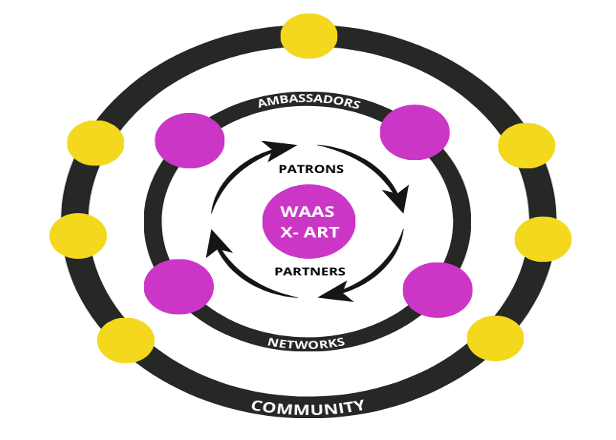
Further information: https://worldacademy.org/arts/
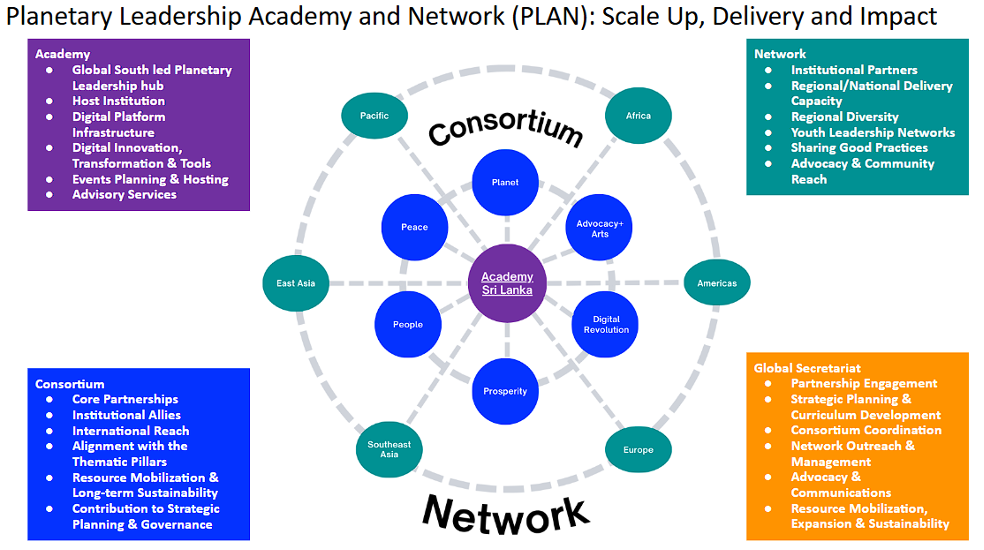
Next Steps – Advancing a Planetary Leadership Academy and Network: PLAN
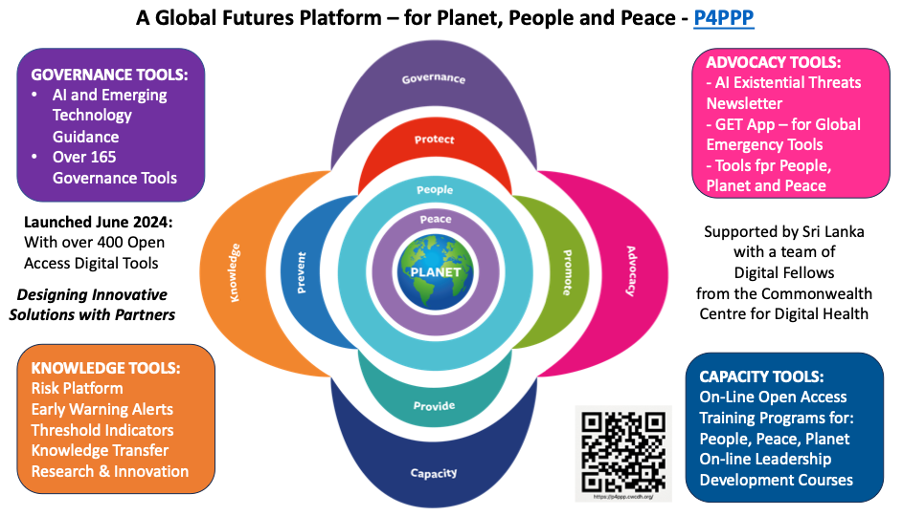
- A Platform – Create Digital Tools and a Learning Management System: building upon the existing Global Futures Platform for Planet People and Peace, create a package of Digital Tools for Planetary Leaders, including:
A Multisectoral AI Governance Framework & Guidelines
A Digital Peace Toolkit
Global Emergency Tracker (GET) – a Digital App
AI–generated Newsletter (on Planet, Peace & People)
Design a Learning Management System with the digital infrastructure to collate and deliver online, open–access educational modules that include the accreditation process for a series of professional training micro–credits, which can collectively be taken as a series of Micro Credentials as part of a Planetary Leadership Massive Open Online Course (MOOC).
Youth – Create a Youth Leaders Network: establish a network of youth leaders.
Guidance – Establish a Planetary Leaders Committee: under the umbrella of the World Academy of Art and Science – WAAS, that provides advice and expertise.
Curriculum – Design the Planetary Leaders Curriculum Framework: improve and enhance the content of the Planetary Leadership Curriculum Framework.
Resources – Collate and Map Existing Leadership Materials: with experts and collaborative partners to create a series of online, open–access micro–credits.
Advocacy – Launch the Planetary Leadership Academy: at collaborative partnership events and through social media to enable the scaling up of future delivery.
The Planetary Leaders Curriculum Framework – an overview:
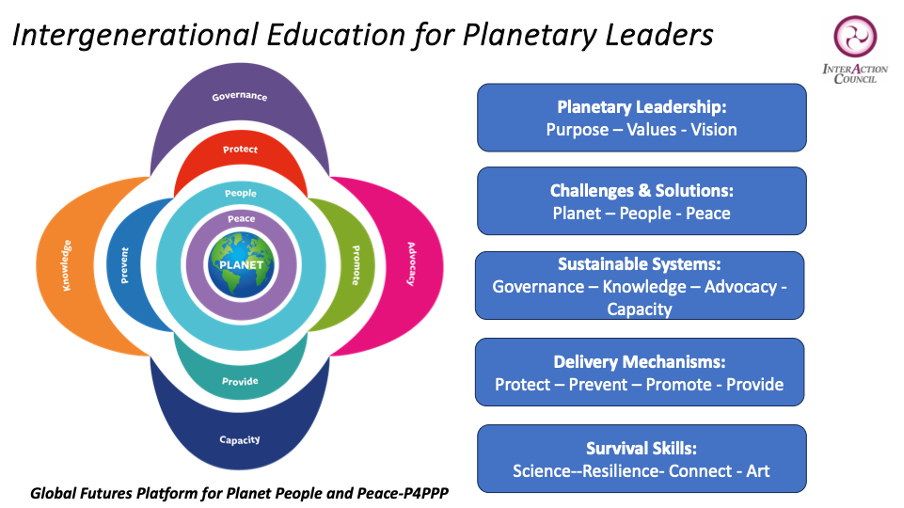
Planetary Leadership:
Purpose of Leadership: Security and Coordination
Principles: Future – Fair – Secure – Systems – Diverse – Dynamic
Vision: Securing the Well–Being of Future Generations for All
Challenges and Solutions:
Planetary Security: Existential Threats and Risks, and the Poly–crisis
Sustainable Development Goals: for Human Security and Planetary Resilience
Plans: Strategy X–EXIST and plans for the Planet Peace and People, Prosperity; AI Governance, Advocacy – Planetary Arts, and Planetary Leadership
Sustainable Systems:
Governance: legislation, policy, finance, accountability, monitoring, prioritisation
Knowledge: root causes, strategic foresight, effective interventions, indicators
Advocacy: communications, catalysts for change, sustainable development
Capacity: infrastructure, life–course educational systems, workforce planning
Delivery Mechanisms:
Protect: emergency & preparedness plans, early–warning systems & interventions, adaptation
Prevent: address root causes and risk factors, avert and mitigate impacts, and recovery
Promote: human security, enablers, flourishing communities, well–being
Provide: local to global integrated multi–sector delivery services and systems
Survival Skills:
Resilience: personal, community, environmental, planetary, survival responses
Wisdom: history, nature–based solutions, ecological principles, indigenous worldviews
Thrive: food & water security, sustainable civilisations, harmonious planetary communities
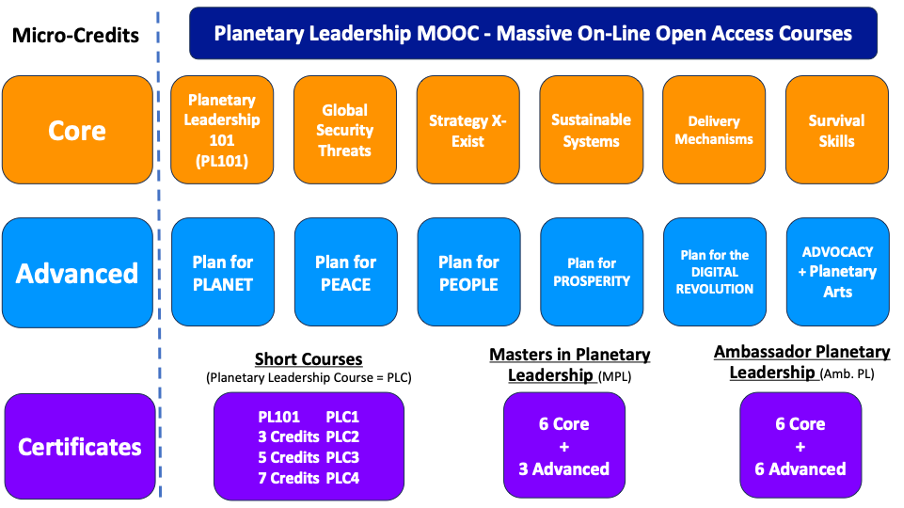
Summary of Planetary Leadership Courses:
The Planetary Leadership Curriculum Framework and Content
Micro Credit | Core Curriculum Content |
1.1 Introduction to Planetary Leadership 101 1.2 Leadership 101: Overview of existing cross – cultural leadership styles and international governance and leadership mechanisms, reflection on relative strengths of historical and current leadership styles and mechanisms. 1.3 Why Planetary Leadership? Critical analysis of historical and current paradigms of leadership – including colonialism, hyper–masculinity, abuses of power; review of leadership skills required for the future, consider what a planetary leader being means personally and globally. 1.4 Purpose of Leadership: Psycho–social and group functions of Leadership – Security and Coordination; Evolutionary origins of Leadership: Transformation of Power – Knowledge – Values; identify the purpose of Leadership for the Future of Humanity. 1.5 Values and Principles for Planetary Leaders: Deep dive into ethics, personal values, and wider planetary leadership principles, including a balance of rights and responsibilities, being strategic and Future–focused – ensure Fairness – provide Security – enable sustainable Systems – promote Diversity for resilience and creative solutions, be Dynamic, authentic, adaptable and inspirational. 1.6 Introduction to Strategy X–EXIST, including an overview of the Plan for the Planet, Plan for Peace, Plan for People, Plan for Prosperity, the Digital Revolution and AI Governance, Planetary Arts and Advocacy. 1.7 A Planetary Leadership Framework: balancing Values: Global Governance for the Planet – rights and responsibilities; Knowledge:Strategic and Sustainable Systems; Power: Courageous, Advocacy and Diplomacy; Transformative: Collaborative, Diverse and Dynamic. Assignment – Vision Setting: Reflect upon personal moral compass and create a vision board to provide hope for Securing the Well–Being of Future Generations for All. | |
2. Global Security Threats | 2.1 Introduction to Global Security Threats 2.2 Overview of Threats and Risks: Understanding Global and Planetary Security, Existential threats and risks; Priorities are considered under the Sustainable Development Goal clusters of Planet, Peace, People and Prosperity. 2.3 Planet: Mass extinctions in the past were caused by asteroids and massive volcanic eruptions, leading to biodiversity collapse; Tipping Points and Runaway Climate Change. 2.4 People: Inequalities, food and water insecurity drive migration and conflict, whilst a warming planet increases the risk of pandemics that could threaten human existence, including intentional or unintentional releases of Synthetic Pandemics. 2.5 Peace: Nuclear, chemical, and biological warfare, including engineered pandemics; Digital Warfare and Artificial Intelligence; Conflicts that risk Nuclear Catastrophe. 2.6 Prosperity: Mechanical–Technical–Industrialisation, including unsustainable growth (planet); unhealthy, crowded cities and rapid travel (pandemics); and widening inequalities (peace). Human security risks are posed by emerging technologies, including ungoverned Artificial General Intelligence. 2.7 The Escalating Polycrisis: Geopolitical turbulence, fragmented global governance, sectoral and reactive responses, compounded by populism, misinformation, the underestimation or denial of risks and competing interests. Threats and risks often interact and reinforce each other with the potential to escalate existential catastrophes. Assignment: Identify priority existential threats in your setting and describe how they interact. |
3. Strategy X–EXIST | 3.1 Introduction to Strategy X–EXIST 3.2 Strategy X–EXIST: gain an overview of the Plan to Save Humanity, including the wider multilateral levers and context. 3.3 Strategy Design: Learn how to apply strategic foresight and digital tools for risk assessment; design evidence–based systems, supported by multi–disciplinary governance and policy formation for preventing Existential Threats. 3. 4 Plan for the PLANET – CPR2 – Cool, Plan, Remove and Recover: prevent tipping points from escalating and creating runaway climate change; design strategic Global, Regional and Community Plans to stabilise Essential Determinants of Life, including Temperature, Air, Water, Land and Food systems, to create a Flourishing Planet for future generations. 3.5 PEOPLE – Prevent Pandemics: enhance global governance and health diplomacy to transform global health security into a global good; enable prevention, detection, early warning systems, preparedness, and response operations through digital solutions; strengthen Health Systems to promote resilience and population well–being for All. 3.6 PEACE – Human Security to Planetary Peace: Create a Culture of Peace to tackle root causes of violence and insecurity as a basis for Human Security; Design Pathways to Peace and rebuild post conflict communities with reconciliation, recovery and rehabilitation plans; Prevent Violence and Wars – intervene early by strengthening the rule of law, diplomacy and development initiatives; Control Weapons: for technologies and weapons of mass–destruction; Promote Planetary Peace: embed planetary security within global security frameworks, to secure the essential determinants of life. 3.7 PROSPERITY – AI Governance and Human Security as Global Goods: Establish Global Governance for Digital Technology and AI, including Artificial General Intelligence; promote open-access, innovative solutions, including for Health and Education; scale renewable energy to underpin Human Security, Sustainable Development, and Growth. Assignment: Based upon priority risks identified for existential threats, develop a strategic framework that applies the relevant aspects of the Plan for the Planet, Plan for Peace, Plan for People and Plan for Prosperity, in accordance with your own setting. |
4. Sustainable Systems | 4.1 Introduction to Sustainable Systems 4.2 Systems Science and Sustainability: Limits to Growth and Sustainability, Ecological Principles and Planetary Boundaries, Complex Adaptive Systems, Unitive Science and the Application of Sustainable Systems to Planning and Policy. 4.3 Governance: infrastructure required for planetary leadership, including effective legislation, policies, finance, accountability, monitoring, prioritisation for oversight, and quality assurance. 4.4 Knowledge: data management systems that enable planning, delivery and monitoring, including feedback loops that address risks and root causes, provide strategic foresight, apply effective interventions, and enhance sustainability through planetary indicators, whilst ensuring accountability, transparency and the management of misinformation. 4.5 Advocacy: communications, catalysts for change, empowering diverse and disadvantaged communities, social mobilisation, planetary arts and cultural transformation. 4.6 Capacity: envisage and design infrastructure, life–course educational systems, workforce planning for the future, continued professional development, review the future of education and changing needs in human skills, capacity and development. 4.7 The Sustainable Development Goals: the UN and Multilateral systems for the SDGs; Critical analysis of the SDGs, and the future of the SDGs. Assignment: For your own setting, identify priorities related to Strategy X–EXIST and design sustainable system enablers for Governance, Knowledge, Advocacy and Capacity. |
5. Delivery Mechanisms | 5.1 Introduction to Delivery Mechanisms 5.2 Policy Delivery: understand effective mechanisms for delivering policies and plans to protect populations and prevent the risks posed by existential security threats, and to promote human security through service delivery. 5.3 Protect: understand and design emergency & preparedness plans and systems, with early warning systems & interventions, adaptation processes, and the application of digital tools. 5.4 Prevent: understand the different approaches to prevention, address root causes and risk factors, and avert and mitigate impacts to promote sustainable recovery. 5.5 Promote: human security, enhance system assets and enablers, and identify and design components to deliver flourishing communities and population well–being. 5.6 Provide: appreciate the interaction between policy and legislation that enhances integrated, multi–sector delivery services and systems at the local to global level, and the role that digital technologies play in transforming delivery mechanisms. 5.7 Digital Delivery: appreciate the current and future opportunities to deliver services with digital technologies as a complex adaptive system. Assignment: For your own setting, identify priorities related to Strategy X–EXIST and design delivery mechanisms for protection, prevention, promotion and the provision of universal services. |
6. Survival Skills | 6.1 Introduction to Survival Skills 6.2 Health and Well–Being: understanding how stress affects decision making and leadership skills, and how to look after personal physical and mental health; understanding the impacts of Existential Threats on population health and well–being, and effective policies for protecting health and promoting healthy populations. 6.3 Resilience: understand and strengthen resilience for personal, community, environmental, planetary, survival responses, food & water security, sustainable civilisations, envision and design resilient, diverse and adaptable planetary communities; develop stamina, confidence and determination, adaptability and the ability to prevent and overcome, resolve and heal from abuse, conflicts and failures. 6.4 Wisdom: historical and nature–based solutions, ecological principles, indigenous worldviews; understanding theory of mind, personality types, conscious, subconscious, and shadow behaviours and motivating factors; understanding unifying principles across religious faiths and personal beliefs, application of unitive science and cosmologies. 6.5 Planetary Harmony: understand and apply nature–based solutions, digital technologies, Culture and the Arts to shape universal urban design; utilise creativity to enhance compassion and kindness for community cohesion across diverse populations to nurture flourishing communities and planetary harmony. 6.6 Transformational Leadership skills: visionary – a planetary world view; courageous – advocacy for planetary peace; catalyst – acting as an agent of change; strategic – future focused sustainable systems; dynamic – diverse and adaptable; collaborative – social emotional literacy and diplomacy skills; authentic – inner and outer integrity and compassion. 6.7 Daily Habits as a Planetary Leader: Incorporate into your daily routine how you look after your physical and mental health, with physical activity, stress management, healthy food, relaxation and sleep; nurture healthy and supportive relationships; acquire a coach/mentor and practice daily self reflection and self–improvement; develop optimism, compassion, and calmness through the arts, meditation or a caring practice. Assignment: Identify how to embed your daily habits as a Planetary Leader, and keep a daily diary to reflect upon enhancing your personal skills as a Planetary Leader. |
Micro Credit | Advanced Curriculum Content |
7.1 Introduction to the Plan for the Planet 7.2 Critical Challenges: understanding planetary boundaries and ecological life systems; risks from climate change and planetary tipping points; rapid biodiversity loss; and the process of climate–related mass extinctions. A Plan for the Planet – Emergency CPR2: 7.3 C= COOL: Emergency Cooling of the Planet: avoid tipping points from escalating into runaway climate change by urgent reductions in methane and black carbon (soot); cool communities by reflecting light and heat with white (high albedo) paints, materials, and plants; consider low–risk geoengineering overseen by monitoring and global governance. 7.4 P= PLAN: Prevent and Prepare: utilise experts & AI to create smart, strategic multi–system plans based upon foresight modelling and warning alerts to identify early tipping points to reduce risks with cost–effective interventions that maximise benefits to people and planet. 7.5 R= REMOVE: Rapid Reduction and Removal: of warming emissions by scaling renewable energy sources and by increasing energy efficiency; enhance the role of soil, oceans, forests and plants in their role as carbon sinks; reduce waste and energy-rich food production with sustainable and regenerative food and agricultural systems, combined with effective carbon removal systems. 7.6 R= RECOVER: Resilience, Repair and Recovery: stabilise our planet’s essential determinants of life, including temperature, air, water, land and food systems, by clearing pollution and enhancing diversity and resilience to repair and recover our environments and ecosystems, enabled by indigenous communities and nature–based solutions. 7.7 FLOURISH: Create Flourishing Communities: enable networks of diverse, intergenerational communities to design local–to–global liveable ecosystems that benefit people and the planet, securing the world we want for the well–being of our future generations. Assignment: Apply nature–based, digital and the Arts to co–create a Plan for the Planet that is relevant for your own environment. | |
8. Plan for PEACE | 8.1 Introduction to the Plan for Peace: 8.2 Root Causes: a deep dive into the root causes of violence and conflict, including climate and environmental change, colonialism, power and poverty, migration, inequalities, human rights and injustice, community, family, and individual risks, and life–course factors. Plan for Peace – From Human Security to Planetary Peace: 8.3 Individual – Create a Culture of Peace: tackle the root causes of violence and insecurity at the individual and societal levels with Human Security for safe, fair, and green communities. 8.4 Community – Pathways to Peace: design and rebuild green communities to promote human security, with recovery from trauma, reconciliation and regeneration as part of peace processes that enable communities to build back better to create enduring peace. 8.5 Country – Prevent Conflicts and Wars: identify risk factors for emerging conflicts to intervene early through the rule of law, diplomacy and development combined with shared values that enable cooperation and trade within and between countries. 8.6 Global – Control Weapons: advocate for and agree on global rights and responsibilities; implement controls for technologies and weapons of mass destruction; adopt no first use policies, remove hair trigger alerts and pledge no use of nuclear weapons; 8.7 Planet– Promote Planetary Peace: embed planetary security within global security frameworks, including redirecting investments in war to avert runaway climate change and secure the essential determinants of life for human security on a flourishing planet. Assignment: Apply the Digital Tools for Peace and cultural activities to co–create a Plan for Peace that is relevant to your own setting. |
9. Plan for PEOPLE | 9.1 Introduction to the Plan for People 9.2 Key Challenges: risks from future Pandemics, genetically engineered infections, intentional and non–intentional laboratory leaks. A Plan for PEOPLE – to Prevent Pandemics: 9.3 Enable Global Governance for Pandemics: invest in the Pandemic Treaty, and strengthen health diplomacy to transform global health security as a global good. 9.4 Strengthen Public Health Systems: prevention, detection, early warning systems, preparedness and response operations with digital solutions. 9.5 Enhance Population Resilience: with Universal Health Systems to promote resilience and population well–being for All. 9.6 Advancing Recommendations to Prevent Pandemics:
Assignment: Apply digital tools and emerging technologies to design a future-oriented health system; apply the Global Emergency Tracker for a setting of your choice. |
10. Plan for PROSPERITY | 10.1 Introduction to the Plan for Prosperity 10.2 Limits to Growth: understand the limitations and challenges of current economic and financial systems, and how they risk longer-term human existence. A Plan for Prosperity – A Pathway to Ecological Civilisations 10.3 Rapid investment to Stabilise Planetary Boundaries: including recovery and regeneration, by redirecting pension savings, government bonds and investments; reorienting subsidies, incentives, indicators and monitoring standards. 10.4 Ensure Human Security as a Global Good: promote open access innovative solutions, including for the Planet, People and Peace; redirect investments to scale low–cost renewable energy to underpin Human Security, Sustainable Development and Growth. 10.5 Fund our Global Commons to enhance Resilience: monitor and price externalities; establish sustainable funding and perpetual endowments from public and private sources to deliver the SDGs, Health, Education, and the Environment in the long term. 10.6 Reduce Inequalities to Prevent Conflicts: promote a culture of Peace, with renewable energy security, transparent finances, progressive taxation, and a transition from aid to post–colonial redistribution, with policies that democratise trade and economic systems. 10.7 Redesign our financial, monetary, and economic systems: so that they are based on real assets, real production, and real ecological value, enabling the democratisation of communities and circular economies, and ensuring a sustainable world. 10.8 Promote the Digital Transformation to Benefit Humanity: establish global governance for digital technologies, including AI and Artificial General Intelligence, to reduce harms and risks, whilst maximising the benefits of digital solutions for humanity. 10.9 Design and Create Ecological Civilisations: actively design communities that combine nature–based solutions, urban planning, and cultural capital to enable planetary recovery and healing, transformed by well–being economies for ecological civilisations. Assignment: Design a sustainable financial system that can be applied within a range of local, national and global settings. |
11. Plan for the DIGITAL Revolution | 11.1 Introduction to the Plan for the Digital Revolution 11.2 The Digital Revolution: understand the historical context, current technologies, and emerging digital innovations, and reflect on the impacts on people and what it means to be human. 11.3 Risks from the Digital Revolution: appreciate the actual and potential risks from current and future technologies. Plan for the Digital Revolution: 11.4 A Global Treaty – which would enhance legal powers but could take 5 years or more for countries to approve–would still make controlling non-state actors a challenge. 11.5 International Safety Protocols – such as those used for Nuclear Non–Proliferation with monitoring by an agency equivalent to the International Atomic Energy Agency. 11.6 A Convention on the Weaponisation of Technologies – this could include the application of the Convention on the Prohibition of the use of Biological or Chemical Weapons; further updates to the convention could include other forms of AI weaponisation. 11.7 Knowledge and Technology as a Global Good – to enhance equity and maximise benefits, as well as preventing the power of emerging technologies falling into the hands of dictators; this would ideally require a global governance infrastructure to apply ethical and safety standards and to facilitate the creation of benefits as global goods. Assignment: Apply the AI Governance Framework to your own cultural and country setting and reflect upon how to strengthen a planetary response. |
12. ADVOCACY & Planetary Arts | 12.1 Introduction to Advocacy and Planetary Arts 12.2 Communications: learn how to design a comprehensive communications and advocacy plan, including the application of social media. 12.3 Catalysts for change: learn about the effectiveness of different theories of change and reflect on how your role as a planetary leader can serve as a catalyst for change. 12.4 Empowering communities: identify structurally disadvantaged populations within your own setting, and learn effective methods to empower diverse communities and enhance engagement to promote resilience and innovative solutions. 12.5 Social mobilisation: learn about the effectiveness of non–violent social activism, community development methodologies and how they can be applied to nature-based solutions to regenerate and heal the planet. 12.6 Cultural transformation: understand the role that Culture plays in maintaining and shaping social norms, and learn how to alter Cultural components to act as a tool for wider cultural and social transformation. 12.7 The Planetary Arts Movement: learn about how the Planetary Arts Movement has applied the above advocacy methods to address Existential Threats to Humanity and inspire hope and imagination to create the world we want. Assignment: Apply the Arts and Cultural activities to the design of an Advocacy Campaign for Strategy X–EXIST according to priorities and a setting of your choice. |
Please send Feedback to: